Expertise-led businesses

Your expertise is the value. The system is how people experience it.

I map how users, clients, and work move through your business, find the handoff making the experience harder than it needs to be, then design and build the right response.

When the work is good

A strong service can still be difficult to use.

A client or user should not need to understand your internal process just to get something done. But as a specialist business grows, the experience often spreads across a website, forms, inboxes, calendars, documents, and people. Each piece may work. The path between them does not.

This is common in IT firms, consultancies, specialist agencies, independent expert practices, and lean product teams where the work is specialized and the system around it grew one piece at a time.

People stop to ask where to go next.

Work crosses tools by hand.

Context disappears at the handoff.

That is not automatically a website problem, an automation problem, or an AI problem. It is a path problem first.

The experience and the work

Every action on the surface creates work underneath.

Someone starts a request, uses a service, sends an update, or asks for the next step. What they see is one moment. Underneath it, information has to stay attached, move to the right place, trigger the right work, and reach a person when judgment is required.

Arrive and orient
Present the right context and next action.
Start or request
Capture what matters and route it correctly.
Use or participate
Guide the experience without making the user decode the process.
Collaborate
Keep people, information, and expectations aligned.
Receive value
Make delivery, status, and the next step clear.
Continue
Preserve context so the relationship does not restart from zero.

New request

Systems review selected

Context received

  1. Interface

    Asks only what matters

  2. Routing

    Sends it to the right place

  3. Automation

    Handles repeatable movement

  4. Context

    Keeps the history attached

  5. Human judgment

    Owns the decision

Next state

Ready for review

Before the tools

Find the bottleneck. Then decide what deserves to exist.

A portal, automation, or AI assistant is not useful because it can be built. It is useful when it removes a specific obstacle without creating three new ones. I start with the path, the people carrying it, and the moment where progress becomes harder than it should be.

The user has to decode the process

They cannot tell what applies to them, what information is needed, or what happens after they act.

The path breaks between tools

A form works. A calendar works. The inbox works. The information still has to be rebuilt at every handoff.

Expert time disappears into coordination

The people with the most valuable judgment spend their time repeating instructions, chasing inputs, and moving routine work.

The automation solves a task, not the experience

One step happens faster, but the user or team still carries the confusion around it.

AI has access, but no job

The tool can draft, summarize, and search. Nobody has defined when it should act, what context it needs, or who checks the result.

The front and the operation tell different stories

The public experience feels considered. The moment someone becomes a client or user, the structure disappears.

If the stuck part is specifically the path from discovery to inquiry, the free Lead-Path Map is the narrower place to start.

AI with a job

Useful AI has a role, a boundary, and a person responsible for it.

AI can prepare context, summarize what changed, route a request, draft a starting point, or watch for something that needs attention. It can reduce the blank page and the repeated movement around a decision. It should not quietly make decisions nobody owns or leave a team babysitting another tool.

Prepare

Retrieve, organize, summarize, and draft from the right context.

Move

Classify, route, update, and carry information through a defined step.

Support

Monitor, flag, and help a person make the judgment that still belongs to them.

Human judgment decides what matters, handles the exception, and owns the result.

Read how Seal & Co. uses AI

Client system

One specialist firm, connected from first impression to team handoff.

CrossShield IT came with real technical experience and an urgent sales push. The response became a connected set of work: an identity and responsive website, a focused resource, Apollo sequences, Make automation, AI-assisted research and drafting, and training and documentation for the team running it.

The point was not any one deliverable. The public experience, the outbound motion, and the team process were designed to support one another.
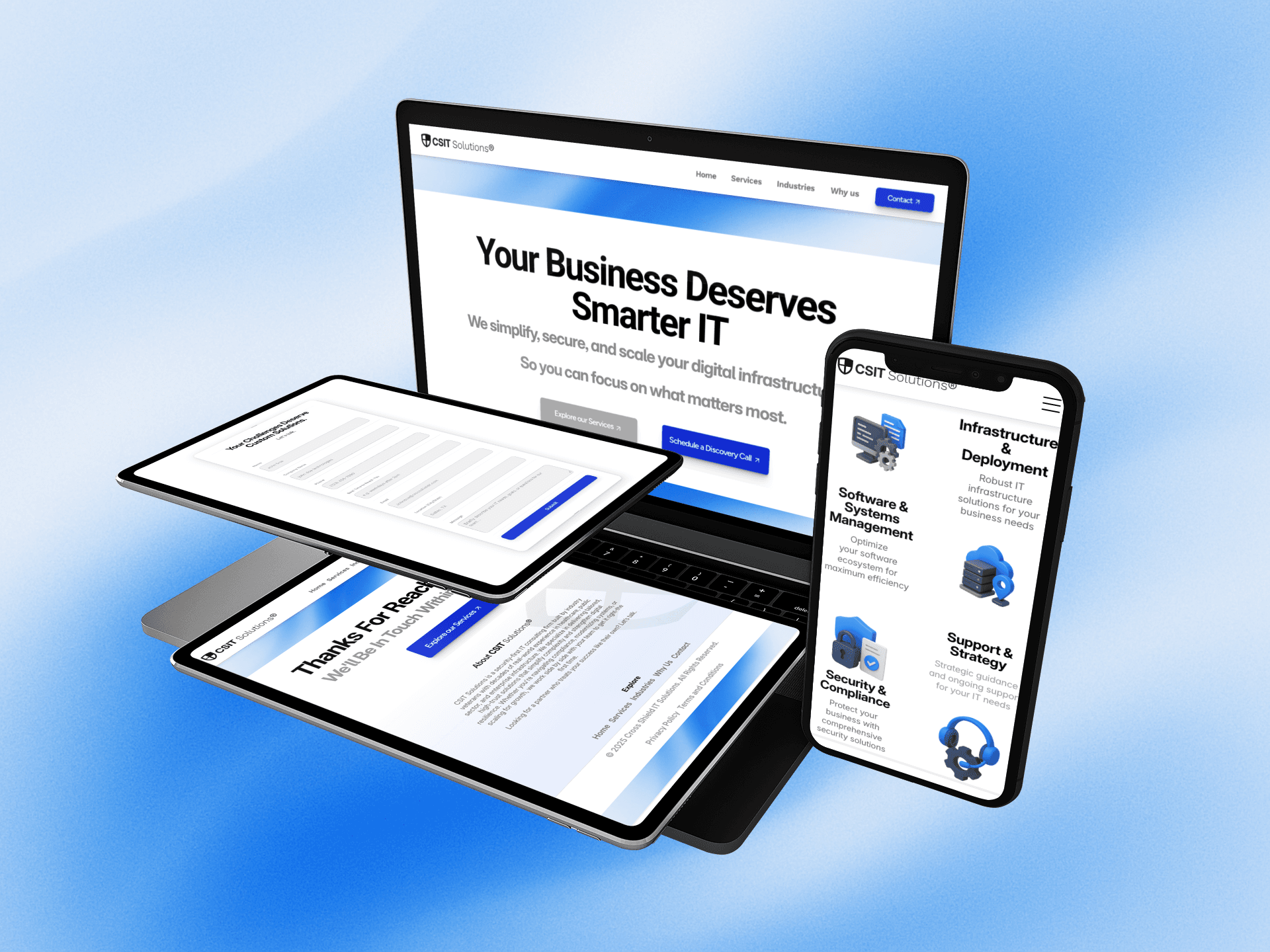
The CrossShield IT website shown across desktop, tablet, and phone
The CrossShield IT brand identity on a dark responsive site

Public experience

A responsive site and focused service structure.

CrossShield outbound: Apollo sequences and a Make automation around a security checklist

Outbound workflow

Sequences, routing, and AI-assisted preparation.

The healthcare IT modernization and security checklist CrossShield used in outreach

Team handoff

Training and documentation for continued use.

What the response can become

Not every bottleneck needs the same build.

Sometimes the right response is a clearer path through an existing tool. Sometimes the tools need a better handoff. Sometimes the experience itself needs to be designed before anyone should automate it. The recommendation follows the problem, not a preferred stack.

A guided inquiry or intake

Ask for the right context once and make the next step visible.

A connected client path

Carry expectations, inputs, status, and follow-up through the relationship.

An internal workflow

Clarify ownership and move information without rebuilding it at every step.

A useful AI layer

Give preparation, routing, drafting, or monitoring a defined role and boundary.

An interface or prototype

Make a product, portal, dashboard, or decision aid understandable before a larger build.

A connected website

Design the public surface around the work and systems it must support.

These are possible responses, not the contents of one fixed package. The actual scope depends on the experience, the tools already in place, and what should remain human.

One focused front door

One audience, one offer, and one primary action need a better page.

Check fit for One Page That Books

A connected path

Several pages, tools, decisions, and handoffs need to work as one system.

Explore Connected System Builds

Beyond client work

The systems thinking is not limited to websites.

Some of the clearest proof lives in Ezra's broader product and operating-system work. These are not Seal & Co. client engagements. They show how the same thinking holds across product flows, team coordination, and practical AI.

Bridger.social

Ezra’s portfolio

Product flows, onboarding, analytics, and design coordination inside an early-stage social app. The work connected what users needed, what engineering could build, and what a distributed team needed in order to keep moving.

View Ezra's Bridger.social case study(opens Ezra’s portfolio in a new tab)

Claude as my OS

Ezra’s portfolio

A working AI operating system for Ezra's own projects, built around persistent context, reusable capabilities, connected tools, and scheduled workflows. The system supports the work. It does not replace responsibility for it.

View Ezra's AI operating-system case study(opens Ezra’s portfolio in a new tab)

Bring me the stuck part

You do not need to arrive with the system figured out.

Tell me what people are trying to do, where it gets slow or confusing, and what your team is carrying by hand. I will give you a straight read on whether it needs a clearer experience, a better workflow, a connected build, or nothing new at all.